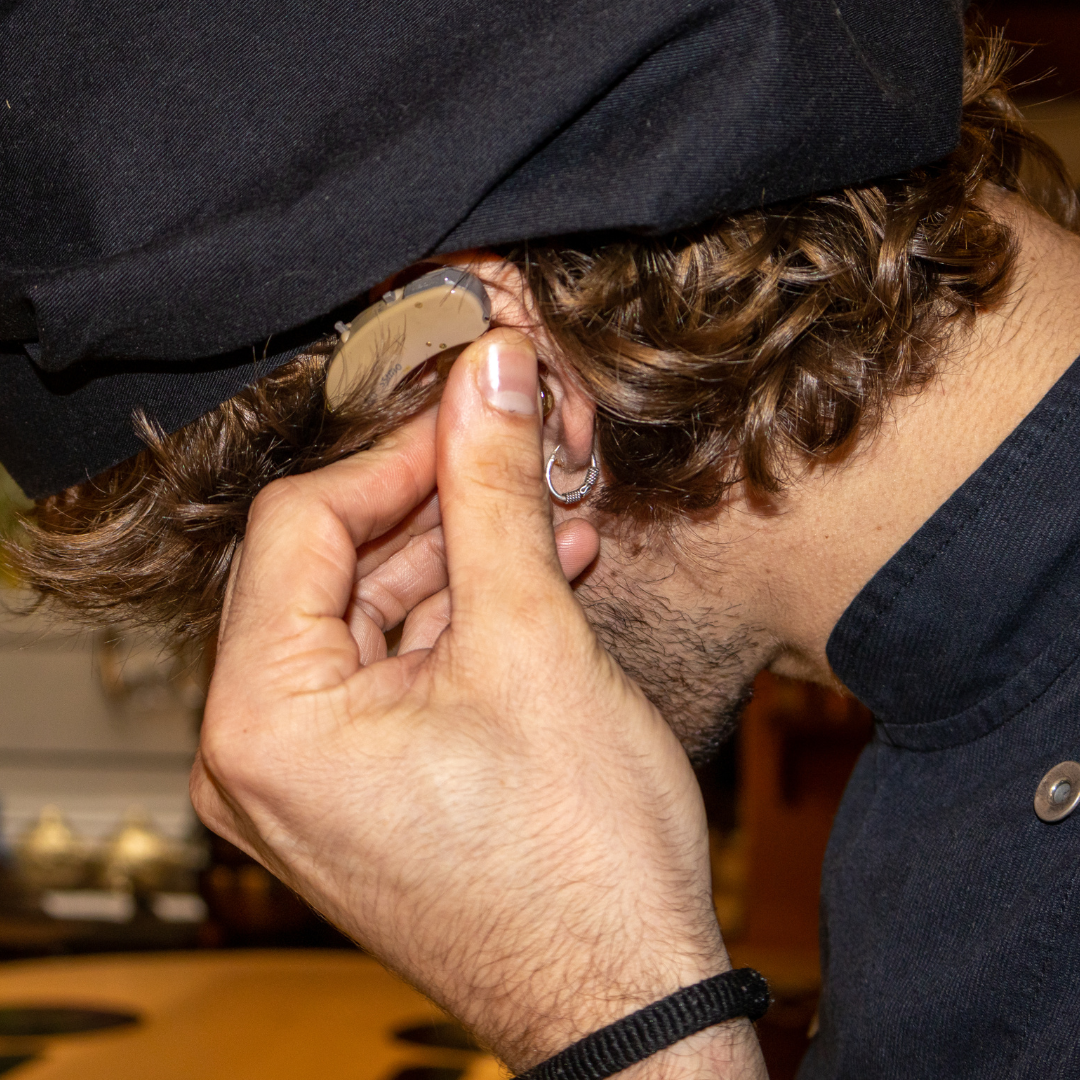
Group discussions in restaurants often become difficult to comprehend when room acoustics compete with your focus and hearing. Our audiology clinic conducts specialized testing to evaluate hearing in both quiet sound booths and noisy simulations to isolate the underlying cause. When we isolate the root mechanism behind your difficult hearing, we guide you toward customized communication solutions.
Understanding the Contrast Between Quiet Hearing and Restaurant Noise
In quiet conditions, an optimal signal-to-noise ratio ensures that the desired speaker sounds markedly clearer than surrounding sound. Modern restaurant environments create the complete opposite listening environment. Background voices, loud music, service clatter, and wall reflections collide with spoken words, demanding heightened cognitive processing to isolate individual speech.
Such listening challenges typically stem from high-frequency hearing loss, auditory-processing deficits, or accumulated noise-induced trauma. Attention, fatigue, dim lighting, and distance from the speaker may make it worse. It is common to display normal baseline audibility on conventional hearing tests while failing comprehensive speech-in-noise testing. Consistent difficulty following restaurant conversation warrants clinical investigation even when everyday hearing seems largely unaffected.
How Audiologists Identify High-Frequency Hearing Loss
We begin by reviewing your history of communication difficulties, prior noise exposures, ringing or tinnitus, pharmaceuticals, and unilateral symptoms.
Pure-tone audiometry measures the softest sounds you can hear at different pitches through air and bone conduction. Patients with high-frequency hearing loss typically exhibit a sloping audiogram configuration where sensitivity steadily declines at elevated pitches. Additional testing may include tympanometry to assess middle-ear function and word-recognition testing to measure speech understanding.
Because a quiet booth does not recreate a busy dining room, speech-in-noise testing can add valuable information. This diagnostic protocol measures your capacity to understand target words or sentences against progressively louder multi-talker babble. In combination, these diagnostic metrics reveal whether communication hurdles involve audibility thresholds, speech discrimination, neural noise management, or mixed conditions.
The Role of Central Auditory Processing Disorders in Adults
Auditory processing disorders interfere with the brain’s ability to process and decipher acoustic signals arriving from the ears. The physical ear mechanisms may capture tones correctly, but the central brain pathways struggle to filter competing inputs, parse similar consonants, or interpret rapid speech. Our clinical team starts by examining peripheral auditory thresholds, subsequently deciding if an auditory-processing test battery or multidisciplinary consultation is necessary.
Behavioral Strategies for Hearing Clearly in Loud Venues
Minor environmental adjustments can boost speech acoustic signals and supply critical visual lip-reading cues. When planning to dine out, select restaurants with calmer atmospheres or arrange reservations during off-peak hours. Facilities equipped with upholstered booths, acoustic baffles, fabric curtains, carpeted floors, and soft materials prove far easier on hearing than minimalist, hard-tiled spaces.
While seated at the restaurant:
- Select a secluded table situated away from prep kitchens, crowded bar stations, loudspeaker zones, and large parties.
- Position yourself with your back toward a solid partition to dampen intrusive background noise from behind.
- Position yourself directly opposite your companions where direct lighting highlights their facial expressions.
- Reduce physical spacing between yourself and companions to maximize direct speech perception.
- Angle your stronger-hearing ear toward the primary individual you wish to converse with.
- Request that companions rephrase misunderstandings using different words rather than repeating the same sentence.
- Confirm important details rather than pretending to understand.
- Allow yourself a short listening respite when auditory concentration starts to feel drained.
- Ask dinner guests to speak with clear enunciation at a steady, natural conversational rate.
- Shouting creates acoustic distortion that actively compromises speech understanding rather than helping.
Advanced Technology for Hearing in Background Noise
Appropriate hearing technology is dictated by the precise diagnosis, primary listening environments, and the degree of diagnosed hearing loss. Customized hearing aids employ directional microphone beamforming, noise cancellation algorithms, and targeted dining programs to prioritize speakers in front while lowering ambient noise. However, users must maintain realistic expectations, as no clinical technology can eliminate every competing background speaker entirely.
Remote wireless microphones offer an exceptional boost to the signal-to-noise ratio in challenging venues. The microphone is placed near or worn by the speaker and sends that voice directly to compatible hearing aids or another receiver. This reduces the effects of distance and surrounding noise.
Further practical hearing technology options include:
- Wireless conference table microphones that capture multi-speaker discussions
- Hearing-loop telecoils that stream clean audio in loop-equipped establishments
- Mobile speech-to-text applications delivering instant visual captions during dinner
- Over-the-counter hearables equipped with directional speech-enhancement algorithms
- Decibel-level applications and restaurant rating guides for finding quiet tables
We will help compare available technology, verify device compatibility, and instruct you on utilizing your selected hearing equipment.
How an Audiologist or Physician Can Improve Hearing in Noise
A thorough audiological evaluation expands the diagnostic scope well past simple quiet listening performance. Our audiology team assesses the unique environments, speaking partners, and ambient noise profiles that challenge you to choose targeted diagnostic tools. The diagnostic battery may encompass pure-tone thresholds, acoustic middle-ear evaluations, suprathreshold word recognition, and speech-in-noise measures. Auditory-processing testing may be considered when the history and initial results support it.
Abrupt auditory reductions, unilateral hearing shifts, or rapid functional deterioration require prompt assessment by an ear, nose, and throat physician. Dedicated individualized care pinpoints the underlying auditory cause rather than dismissing your struggles as standard restaurant noise.
Arrange a Hearing Evaluation With Us Now
If struggling through dinner conversation leaves you mentally exhausted, detached, or constantly guessing, schedule a complete hearing evaluation with our clinic. We provide proven treatments to enhance your hearing in noisy environments, offering hearing aid fine-tuning, specialized assistive accessories, and individualized auditory therapy.
Connect with us today to arrange your clinical visit and take the first step toward clearer, easier dining communication.